Großer Erfolg bei DFG-Forschungsförderung: Forschung zu Hochgeschwindigkeits-Prozessen wird fortgesetzt
The German Research Foundation (DFG) continues to fund the FUNDAM³ENT research group, which operates successfully under the leadership of Chemnitz University of Technology and aims to produce components with functional surfaces from high-strength materials using high-speed shear cutting
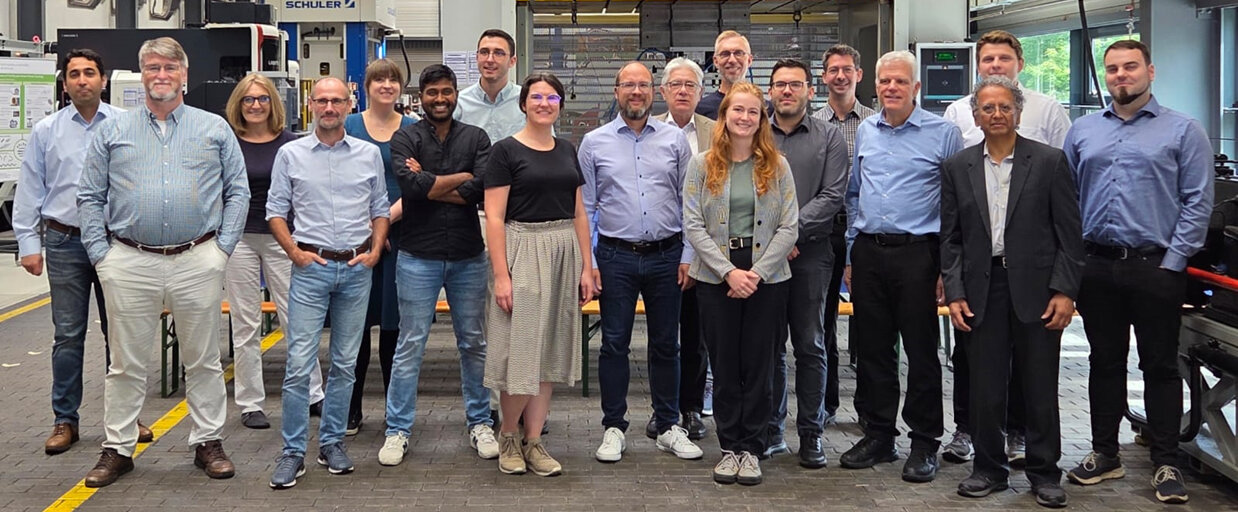
There is great excitement at the Chemnitz Institute of Materials Science and Engineering: The German Research Foundation (DFG) is funding the research group ‘Functional Surfaces through Adiabatic High-Speed Processes: Microstructure, Mechanisms and Model Development – FUNDAM³ENT’ (FOR 5380), led by Chemnitz University of Technology, for a further four years. During this period, the research group will receive funding of around 3.9 million euros, including a programme lump sum for indirect costs – of which approximately 1.64 million euros will go to Chemnitz University of Technology. Prof. Dr Thomas Lampke, holder of the Chair of Materials and Surface Engineering at Chemnitz University of Technology, remains the spokesperson for the research group.
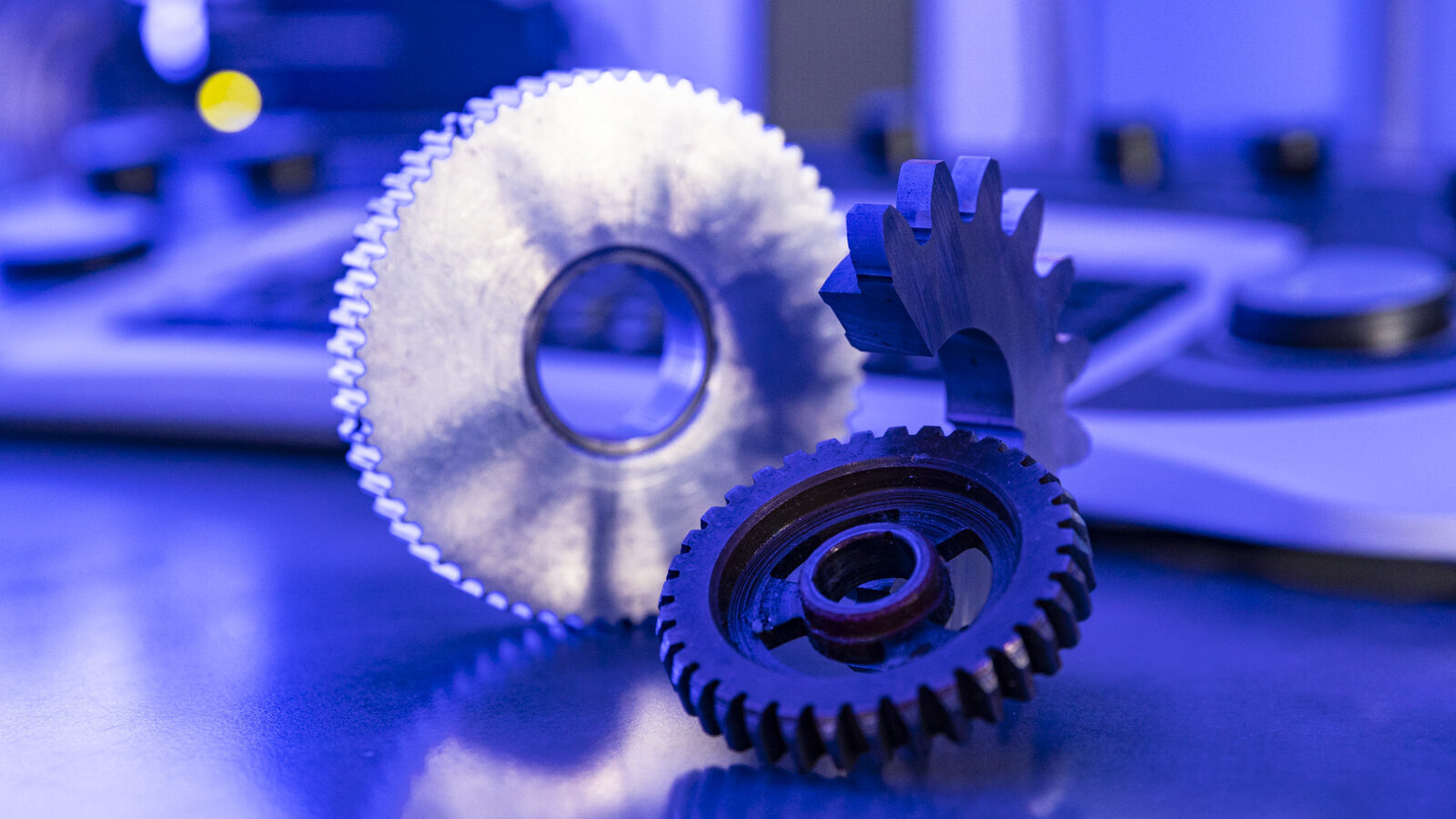
The research focuses on so-called high-speed shear cutting, which is used in sheet metal component manufacturing and, from both an economic and environmental perspective, represents an efficient alternative to conventional methods for shearing steel. The research group also includes scientists from the Fraunhofer Institute for Machine Tools and Forming Technology (IWU) in Chemnitz, the Fraunhofer Institute for Mechanics of Materials (IWM) in Freiburg, TU Dortmund, TU Munich and the Chair of Materials Science at TU Chemnitz. “The excellent collaboration between the sub-projects at the various locations has been crucial to the scientific successes our research group has achieved so far,” says Lampke.
Cut surfaces are examined in detail in order to improve their properties
During the first funding period, the DFG research group was able to demonstrate that significantly higher cutting speeds during shear cutting result in a markedly improved property profile of the cut surfaces. “In addition to increased geometric accuracy, the cut edges also exhibit better wear, corrosion and fatigue behaviour. Ideally, this makes it possible to eliminate energy-intensive post-processing steps, thereby significantly shortening the process chain,” reports Lampke.
Thanks to the close integration of production engineering and materials science within the research group, our scientific understanding of the mechanisms occurring in sheet metal during the cutting process has already been significantly expanded. Research has been carried out into how the formation of so-called adiabatic shear bands in the material can be specifically utilised to achieve improved functionality of the cut surface. These shear bands are highly sheared regions of material, just a few micrometres wide, which form at high deformation rates; the exact conditions under which these effects occur were systematically investigated for the first time by the research group. “It became apparent that, in addition to the material and the cutting speed, the stress state prevailing in the sheet metal – which is largely determined by the distance between the punch and the die, i.e. the cutting gap – also has a decisive influence on the properties of the cut surface,” says Dr Rico Drehmann, a research assistant at the Chair of Materials and Surface Engineering.
Further research is intended to pave the way for practical application
During the second funding period, the aim is to further deepen this understanding whilst simultaneously paving the way for industrial implementation. To this end, the project will, amongst other things, examine different types of steel, vary the sheet temperature during the cutting process, reduce tool wear and produce complex two- and three-dimensional component geometries. “Our findings are being incorporated into the production of an industry-relevant demonstrator. This is a link in a so-called flyer chain, which is used as a load-bearing and lifting chain in, for example, forklift trucks or machine tools,” said Lampke. The research over the next four years is also intended to strengthen Chemnitz University of Technology’s core competencies in materials and intelligent systems, as well as resource-efficient production and lightweight construction.
Support for early-career researchers
All the research institutions involved place particular emphasis on supporting young researchers. “In addition to numerous conference participations, the annual doctoral seminars, to which internationally renowned scientists are invited, are particularly worth highlighting,” says Lampke. This academic exchange provides important impetus for the students’ own further professional development and helps to build a broad network. In the first four years, this has resulted in more than 20 high-quality publications. Evidence of the early involvement of students in the consortium’s research is provided by the 19 completed student theses produced to date within the research group.
A Focus on Research Data Management
The research group is placing particular emphasis on the increasingly important topic of research data management (RDM). To this end, the instance of the open-source RDM system openBIS – which was set up by the project partners during the first funding period – is being further expanded. The primary aim is to gain new insights through comprehensive, largely automated data analysis. This goes hand in hand with even closer integration with overarching data infrastructures such as the NFDI-MatWerk consortium.
Keyword: DFG research groups
DFG research groups enable researchers to address current and pressing issues in their fields and to establish innovative lines of research. They receive funding for up to eight years. The German Research Foundation (DFG) currently funds 191 research groups, 7 clinical research groups and 15 ‘Kolleg’ research groups. Clinical research groups are additionally characterised by the close integration of scientific and clinical work, whilst ‘Kolleg’ research groups are specifically tailored to research methods in the humanities and social sciences. A total of three DFG research groups are currently funded under the leadership of Chemnitz University of Technology.
Further information Source: TUC News
Contact: Dr Rico Drehmann, telephone 0371 531-39331, email rico.drehmann@mb.tu-chemnitz.de , and Prof. Dr Thomas Lampke, telephone 0371 531-36163, email thomas.lampke@mb.tu-chemnitz.de .
Großer Erfolg bei DFG-Forschungsförderung: Forschung zu Hochgeschwindigkeits-Prozessen wird fortgesetzt
Contact us
Univ.-Prof. Dr.-Ing. habil. Thomas Lampke
TU Chemnitz
Materials and Surface Engineering Group
09107 Chemnitz
Phone: +49 (0) 371 / 531-36163
Fax: +49 (0) 371 / 531-23819
Institutes